The global tailor welded blank market includes major steel and automotive suppliers with expertise in welded blanks, welded coils, laser welding, automotive stamping, and lightweight body structures. Five notable manufacturers and suppliers are:
- Shanghai Changjian Laser Tailor Welded Blanks Co., Ltd. (Changjian Welding) – China and international markets
- ArcelorMittal Tailored Blanks – Global
- TWB Company LLC – North America
- Baosteel Tailored Blanks – China and international markets
- voestalpine Metal Forming GmbH – Europe and global markets
These companies differ in their geographic coverage, steel and aluminum capabilities, production footprint, and level of integration from material supply to tailor welded component manufacturing.
What Is a Tailor Welded Blank?
A tailor welded blank (TWB) is a sheet-metal assembly made by welding two or more steel or aluminum blanks with different thicknesses, grades, or coatings before the final stamping process.
In simple terms, a tailor welded blank allows an automotive manufacturer to put the right material and thickness in the right area of a component.
For example, a car door inner panel may need greater strength around one section while other areas can use thinner material. Instead of producing the entire part from a single thick sheet, manufacturers can join different sheets through laser welding and then stamp the combined blank into its final shape.
This approach can reduce material use, component weight, and the number of individual parts required for some automotive body applications.
Why Are Tailor Welded Blanks Used in Automotive Manufacturing?
Automotive manufacturers are under constant pressure to reduce vehicle weight while maintaining body strength, safety, durability, and manufacturing efficiency.
Tailor welded technology addresses this challenge by combining different sheet materials before forming.
Common benefits include:
- Reduced vehicle body weight
- Optimized material distribution
- Fewer individual stamped parts
- Reduced assembly and joining operations
- Improved material utilization
- Potential reduction in component cost
- Better structural performance
- Greater flexibility in automotive body design
The technology is particularly relevant to automotive body components such as door panels, B-pillars, side rails, floor components, wheelhouse parts, and other stamped structures.
How Are Tailor Welded Blanks Made?
The basic production process normally includes several stages.
Material Selection
Steel or aluminum sheets are selected according to the required strength, thickness, corrosion resistance, formability, and stamping performance.
Different materials can be combined within the same blank when the application requires it.
Blanking and Cutting
Individual sheet sections are cut into predetermined shapes and dimensions.
High dimensional accuracy is important because the edges must align correctly before welding.
Edge Preparation
The cut edges are prepared for welding. Edge quality and cleanliness affect weld consistency and the final blank quality.
Laser Welding
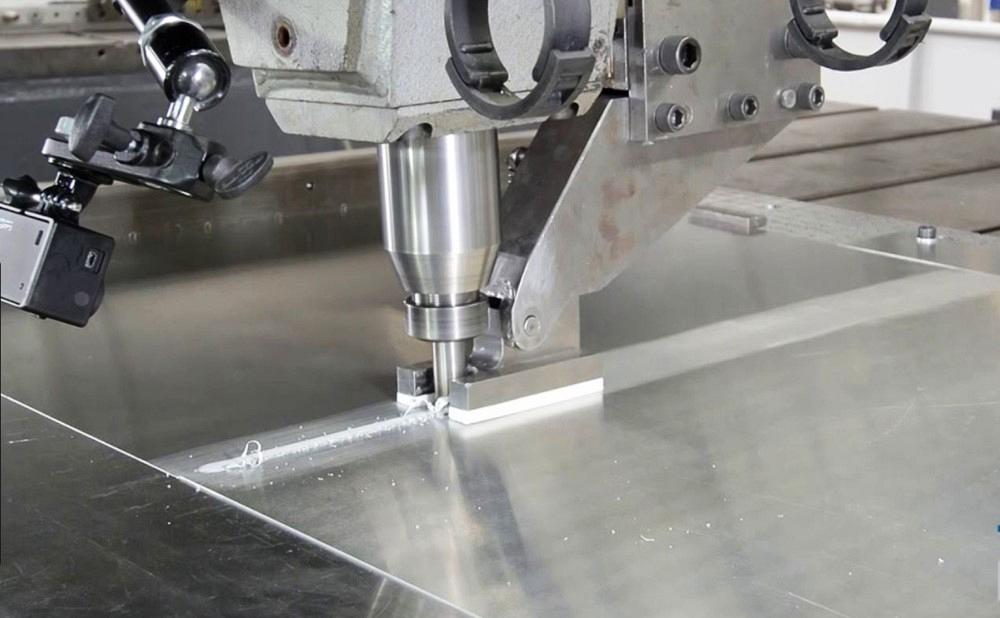
The individual blanks are positioned together and joined using a laser welding process.
Laser welding produces a narrow weld seam and is well suited to automated, high-speed production.
Inspection
Manufacturers inspect weld quality, dimensions, surface condition, and other parameters before the blanks are shipped to the stamping operation.
Stamping
The finished tailored blank is transferred to a stamping line, where it is formed into the required automotive component.
The result is a single stamped part made from different material sections.
Leading Tailor Welded Blank Manufacturers Worldwide
The following companies were selected based on their involvement in tailor welded products, automotive lightweighting, manufacturing capabilities, technology background, and international market presence.
1. Shanghai Changjian Laser Tailor Welded Blanks Co., Ltd. (Changjian Welding)
Shanghai Changjian Laser Tailor Welded Blanks Co., Ltd., also known as Changjian Welding, is a Chinese manufacturer focused on automotive laser welding and lightweight manufacturing solutions.
The company was established in 2003 and operates from Shanghai Baoshan Industrial Park. Its manufacturing site covers approximately 35 mu, with around 20,000 square meters of plant space.
Its core business includes automotive laser tailor welded blank processing, automotive sheet blanking, and shearing services.
Changjian Welding has introduced laser tailor welding technology from Germany's TRUMPF and uses Soudronic laser welding systems together with blanking production equipment.
The company reports an annual welding and splicing capacity of approximately 2.8 million meters and an annual blanking capacity of around 4,800 tonnes.
Its products and services are used in automotive manufacturing projects. The company lists customers and industry partners including SAIC Volkswagen, SAIC General Motors, Geely Auto, and Huayu Automotive Systems.
For automotive manufacturers looking for a China-based supplier, Changjian Welding is notable for combining welded blanks, blanking, shearing, and laser welding within one manufacturing operation.
Key strengths:
- Automotive laser tailor welded blank processing
- Approximately 20,000 m² manufacturing facility
- Around 2.8 million meters annual welding and splicing capacity
- Approximately 4,800 tonnes annual blanking capacity
- Experience in automotive sheet-metal processing
- Integration of blanking and laser welding services
2. ArcelorMittal Tailored Blanks
ArcelorMittal
ArcelorMittal is one of the world's major steel and mining companies, with operations and customers across numerous international markets.
Its tailored blank activities are connected to its broader automotive steel and lightweighting solutions. The company supplies advanced steel products and solutions for automotive applications and works with vehicle manufacturers on material and component development.
ArcelorMittal's position in the steel industry gives its tailored blank business access to extensive material expertise.
This is especially useful for automotive applications where material grade, thickness, strength, formability, and corrosion performance must be considered together.
Tailored blanks can combine different steel grades and thicknesses within a single component. This allows engineers to optimize material distribution instead of selecting one material specification for the entire part.
Key strengths:
- Global steel production and supply network
- Strong automotive steel expertise
- Advanced high-strength steel capabilities
- Lightweight automotive solutions
- International customer base
- Material development expertise
For large automotive programs, the combination of steel production and tailored blank technology can simplify material sourcing and support large-volume production.
3. TWB Company LLC
TWB Company LLC
TWB Company LLC is a major North American manufacturer of tailor welded products.
The company was formed in 1992 as a joint venture between Worthington Steel and ThyssenKrupp Steel. Its history is closely connected with the development of automotive tailor welded blanks in North America.
Today, TWB is a joint venture between Worthington Steel and Baosteel Tailored Blanks.
Over more than three decades, TWB has developed extensive experience in tailor welded products for automotive manufacturing.
Its position in North America makes it an important supplier for vehicle manufacturers and automotive component producers operating in the region.
The company's expertise centers on combining different steel materials and thicknesses into engineered blanks that can subsequently be stamped into automotive components.
Key strengths:
- More than 30 years of industry experience
- Strong North American market presence
- Automotive tailor welded products
- Connection with Worthington Steel and Baosteel
- Experience in high-volume automotive applications
- Focus on material optimization and lightweighting
TWB is particularly relevant for buyers searching for a North American supplier of automotive tailored blanks.
4. Baosteel Tailored Blanks
Baosteel Tailored Blanks
Baosteel Tailored Blanks is an international supplier of lightweight solutions for the automotive industry.
Its technology background can be traced to the development of the first tailored blank in 1983 as part of Thyssen Stahl AG. Since then, the business has developed tailored products made from steel and aluminum.
The company's focus is on producing customized components that combine different materials or thicknesses according to the requirements of the vehicle body.
Applications include components such as:
- Inner door panels
- B-pillars
- Side rails
- Structural automotive body components
- Other stamped body-in-white parts
Baosteel Tailored Blanks has production locations across Europe, Asia, and America, giving it an international manufacturing footprint.
The company also supports customers beyond blank production, including component development, prototype production, and series production.
This broader engineering approach can be useful when an automotive OEM or Tier 1 supplier needs more than a standard welded blank.
Key strengths:
- International production footprint
- Steel and aluminum tailored products
- Automotive lightweighting expertise
- Component development support
- Prototype and series production
- Experience with body-in-white applications
5. voestalpine Metal Forming GmbH
voestalpine Metal Forming GmbH
voestalpine Metal Forming GmbH is part of the voestalpine Group and specializes in formed components, system components, tubes, sections, and precision strip products.
The company's capabilities combine materials expertise with metal forming and component manufacturing.
For automotive customers, this combination is relevant because lightweight vehicle structures often require several technologies to work together. Material selection, forming, joining, and component engineering all affect the final product.
The company's international presence also supports customers with production requirements across different markets.
Its wider product and manufacturing portfolio makes voestalpine different from suppliers that focus only on tailor welded blank production.
Key strengths:
- Advanced steel and metal forming expertise
- Formed automotive components
- Tube and section manufacturing
- Precision strip products
- International manufacturing presence
- Integrated material and forming knowledge
For projects where tailor welded technology is part of a wider forming or structural component program, voestalpine can be a relevant supplier to evaluate.
Comparison of the Top 5 Manufacturers
| Manufacturer | Main Market | Key Capability | Automotive Focus | Global Presence |
|---|
| Shanghai Changjian Laser Tailor Welded Blanks | Global | Laser welding, blanking, shearing | High | China / international connection |
| ArcelorMittal Tailored Blanks | Global | Steel + tailored solutions | High | Global |
| TWB Company LLC | North America | Tailor welded products | High | North America / international connection |
| Baosteel Tailored Blanks | Global | Steel and aluminum tailored products | High | Europe, Asia, America |
| voestalpine Metal Forming | Global | Metal forming and components | High | Global |
Welded Blanks vs. Welded Coils
The terms welded blanks and welded coils can refer to different forms of welded sheet-metal products and should not automatically be treated as identical.
A welded blank is normally produced in a predefined flat shape or geometry for a specific forming operation. Different sheet sections can be joined before stamping.
Welded coils, on the other hand, are supplied in coil form and may involve continuous or longitudinal welding processes depending on the product and application.
For automotive body manufacturing, the choice depends on the production process, component geometry, material requirements, and stamping method.
When searching for a supplier, buyers should therefore clarify whether they need:
- Tailored welded blanks
- Laser-welded blanks
- Coil-to-coil welding
- Welded coils
- Customized stamped blanks
- Blanks for hot stamping
- Blanks for cold forming
Laser Welding in Tailor Welded Blank Production
Laser welding is widely associated with modern tailor welded blank production because it can create a precise weld between sheet sections.
Compared with traditional welding methods, laser welding can offer a narrow heat-affected zone and high process speed when properly controlled.
A typical laser welding line includes:
- Sheet positioning
- Edge alignment
- Laser welding
- Weld inspection
- Dimensional inspection
- Blank handling
- Packaging and delivery
Production quality depends on more than the laser itself. Sheet edge quality, material condition, joint alignment, laser parameters, welding speed, monitoring, and inspection systems all affect the final result.
Tailor Welded Blanks for Automotive Body Applications
The automotive body is one of the largest application areas for tailored blanks.
A vehicle body contains components with different structural requirements. Some areas require high strength, while other areas can use thinner material.
A tailor welded design allows engineers to combine these requirements within one blank.
Typical applications include:
Door Components
Different thicknesses can be used in selected areas of door structures to balance weight, strength, and forming requirements.
B-Pillars
B-pillars are structural components that require suitable strength and forming performance. Tailored material distribution can help engineers design the component according to different load requirements.
Side Rails
Side rails can benefit from material optimization because different sections of the component may have different structural requirements.
Floor Components
Floor and underbody parts can use tailored thicknesses to reduce unnecessary material while maintaining the required structural performance.
Wheelhouse Components
Tailored blanks can also be used for selected body structures where different thicknesses or grades are needed within one stamped component.
What Should You Consider When Choosing a Tailor Welded Blank Manufacturer?
Price is only one part of supplier selection. Automotive buyers should evaluate the entire production capability.
Material Capability
Check whether the supplier works with the steel grades, aluminum grades, coatings, and thickness combinations required for the project.
Welding Technology
Ask about the supplier's laser welding equipment, welding process, automated systems, monitoring technology, and quality inspection.
Blanking Accuracy
Poor blank dimensions can create problems during stamping. Cutting accuracy and edge quality should therefore be included in supplier evaluation.
Production Capacity
Large automotive programs may require high and stable production volumes. Check annual capacity, line availability, production redundancy, and delivery capability.
Quality Management
Review the manufacturer's quality management system, inspection procedures, traceability, process control, and automotive quality experience.
Engineering Support
A strong supplier should be able to support material selection, blank design, welding parameters, prototypes, trials, and series production when required.
Location and Logistics
For global automotive programs, transportation distance, local production capability, lead time, and supply-chain stability can affect the overall project cost.
Tailored Blanks and Automotive Lightweighting
Vehicle lightweighting is one of the main reasons why tailored blank technology continues to attract attention.
Using one material thickness across an entire component can result in excess material in areas that do not require the same level of strength.
Tailor welded technology provides another option: use thicker or stronger material where needed and thinner material where possible.
This material strategy can reduce component mass while preserving the required properties.
The exact weight reduction depends on the component design, materials, thickness distribution, forming process, and vehicle architecture. Therefore, a tailor welded blank should be evaluated as part of the complete component design rather than as a standalone material-saving technology.
How to Choose Between the Top 5 Manufacturers
There is no single best tailor welded blank manufacturer for every project.
A China-based automotive program may prioritize local production, short delivery times, and competitive manufacturing costs. A global OEM may place greater emphasis on international production coverage and multi-region supply.
A practical selection process is:
Step 1: Define the component
Identify the exact automotive body component and stamping process.
Step 2: Define the materials
Specify steel or aluminum grade, thickness range, coating, and mechanical requirements.
Step 3: Define the welding requirements
Determine weld type, seam location, dimensional tolerance, and inspection requirements.
Step 4: Estimate annual volume
Compare expected production volume with the supplier's available capacity.
Step 5: Evaluate engineering support
Check whether the manufacturer can support prototypes, tooling trials, process development, and production ramp-up.
Step 6: Compare total cost
Consider material utilization, welding, blanking, logistics, quality costs, tooling, and production efficiency instead of comparing the blank price alone.
Frequently Asked Questions
What is a tailor welded blank?
A tailor welded blank is a sheet-metal assembly made by welding two or more blanks with different thicknesses, grades, or materials before stamping. It is widely used to optimize material distribution in automotive components.
What is the difference between a welded blank and a tailor welded blank?
A welded blank is a broad term for a blank assembled through welding. A tailor welded blank specifically refers to a blank designed with different material properties, thicknesses, or grades in different areas to meet component requirements.
Why is laser welding used for tailor welded blanks?
Laser welding can provide a precise, narrow weld seam and is suitable for automated production. These characteristics make it well suited to joining sheet sections before automotive stamping.
What materials can be used in tailor welded blanks?
Steel is widely used, including different grades and thicknesses. Aluminum and other material combinations can also be used depending on the application and welding process.
What automotive parts use tailor welded blanks?
Common applications include door inner panels, B-pillars, side rails, floor components, wheelhouse parts, and other automotive body and body-in-white components.
Are tailor welded blanks only used for lightweighting?
No. Lightweighting is a major application, but tailor welded blanks can also improve material utilization, combine different strength levels, reduce the number of components, and support more flexible component design.
What should I ask a tailor welded blank supplier?
Ask about material grades, thickness ranges, welding technology, blanking accuracy, annual production capacity, quality systems, inspection methods, prototype support, production locations, and automotive customer experience.
Are welded coils the same as tailor welded blanks?
No. Welded coils and tailor welded blanks can involve different production formats and processes. A tailor welded blank is generally prepared as a specific flat blank for subsequent forming, while welded coils are supplied in coil form.
Final Takeaway
Tailor welded blank technology gives automotive manufacturers a way to combine different material grades and thicknesses within one stamped component. Laser welding, accurate blanking, material selection, and process control are central to producing consistent results.
The five companies covered in this guide represent different strengths:
- Shanghai Changjian Laser Tailor Welded Blanks – China-based laser welding and automotive blanking
- ArcelorMittal Tailored Blanks – global steel and automotive material expertise
- TWB Company LLC – long-standing North American tailor welded blank experience
- Baosteel Tailored Blanks – international tailored steel and aluminum solutions
- voestalpine Metal Forming – integrated metal forming and component expertise
For an automotive body project, the best supplier depends on the required material, component design, annual volume, welding process, quality requirements, and production location. Comparing these factors together provides a more useful basis for supplier selection than comparing unit price alone.